
In foodservice, packaging and serviceware are no longer passive elements of the delivery process. They are part of the experience itself: shaping how food is perceived, how brands are understood, and how efficiently operations run.
From a quick-service restaurant serving hundreds of meals during the lunch rush to a stadium welcoming thousands of fans on match day, every foodservice environment has its own operational challenges. Yet they all rely on packaging and serviceware to do far more than simply contain food. They must protect product quality, support efficient operations, reflect the brand, and create a positive customer experience. Finding the right balance between these expectations has become one of the defining challenges—and opportunities—of modern foodservice.
As foodservice continues to evolve across channels and consumption occasions, packaging is expected to do far more than simply contain food. It has become a strategic tool that shapes customer experience, reinforces brand identity, supports operational performance, while increasingly contributing to how businesses approach their sustainability ambitions.
Foodservice packaging is part of the first impression
The experience of food begins before the first bite. It begins the moment packaging is seen, held, and opened.
Well-designed foodservice packaging can elevate perceived quality and reinforce care. Poorly considered solutions can undermine even the best food offering.
Shape, structure, and visual language all contribute to this perception. More structured formats such as square or rectangular containers often communicate efficiency and modern foodservice systems, while bowl-based formats tend to signal freshness, informality, and ease of consumption.
Within this space, RIDGE-style containers illustrate how design, material, and perception come together in practice. Available in different sizes and formats with secure matching lids—and optional fully compostable transparent windows—RIDGE is designed to balance presentation and performance across takeaway and delivery environments.
Material and finish further shape how these solutions are perceived. The same product family can be expressed in different visual directions: warmer, more natural tones that emphasize sustainability and authenticity, or a cleaner, whiter aesthetic that creates a more refined and premium appearance.
These variations are not superficial. They influence how food is framed, how quality is interpreted, and how brand expectations are formed before consumption even begins.
Branding extends the experience beyond the plate
Packaging has become one of the most direct and consistent brand touchpoints in foodservice.
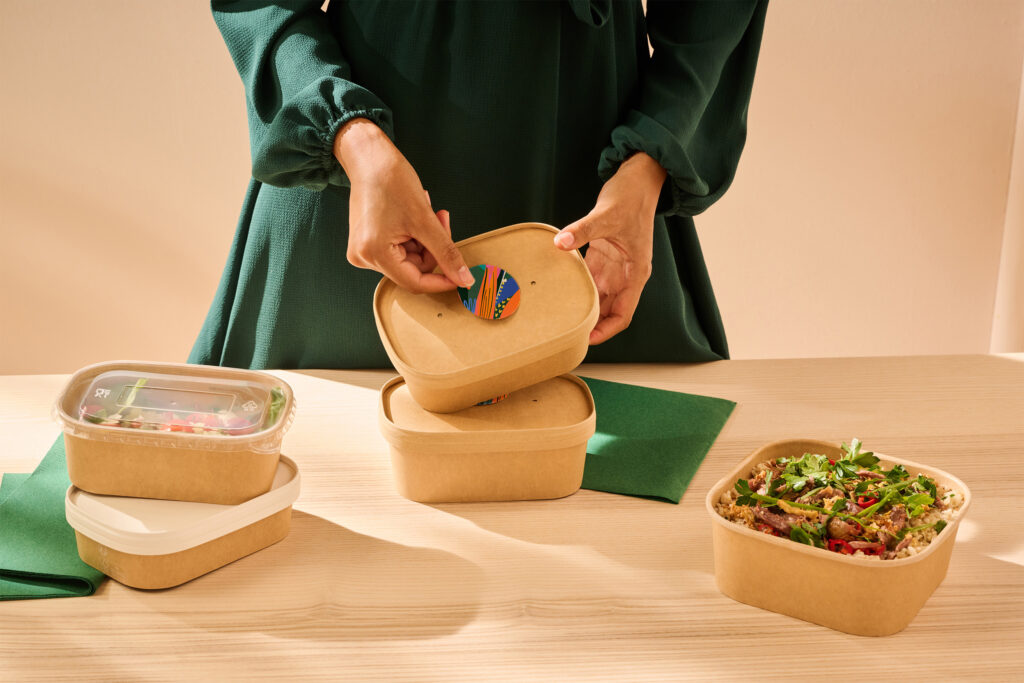
Beyond structure and material, branding techniques such as in-mold labeling (IML), embossing, and tailored label systems allow operators to extend their identity into every customer interaction. This transforms packaging from a functional carrier into a branded experience moment.
At deSter, we support foodservice operators in integrating branding across packaging and serviceware systems, ensuring consistency across channels – from counter service to delivery and large-scale events.
In an increasingly competitive environment, this consistency is not decorative. It is essential. Packaging is often the only physical brand interaction customers take away with them.
Operational performance in real-world foodservice environments
Foodservice packaging performance is no longer defined by a single factor, but by how systems, material quality, and operational realities work together in practice.
Foodservice packaging systems are evolving across reuse, recycle and compost models
Sustainability in foodservice packaging is no longer defined by a single solution. It is defined by systems.
Reusable packaging is increasingly adopted in environments such as stadiums, festivals, and large-scale events, where regulatory and operational scales enable circular models. These systems require durable, consistent designs that can withstand repeated use while maintaining a strong user experience.
At the same time, reuse must function within real-world operational constraints. Not all operators are ready to fully transition to reusable systems, and infrastructure and behavioral changes remain key considerations.
In this context, solutions such as REVOLVE reusable bowls and matching reusable coffee cups demonstrate how consistency and design coherence can support circular usage models across different foodservice formats.
In high-volume event environments, systems such as REPLAY smart cups further enhance operational control. Through integrated tracking technologies such as RFID, these solutions support deposit return systems and enable more efficient management of reuse flows at scale.
Alongside reusable systems, recyclable and compostable solutions remain essential in bridging the transition toward more circular foodservice models.

deSter’s portfolio spans all three approaches—reusable, recyclable, and compostable—allowing operators to choose solutions that align with their operational realities and sustainability roadmaps.
Quality is defined in use, not appearance
In foodservice packaging and serviceware, quality is ultimately experienced, not always observed.
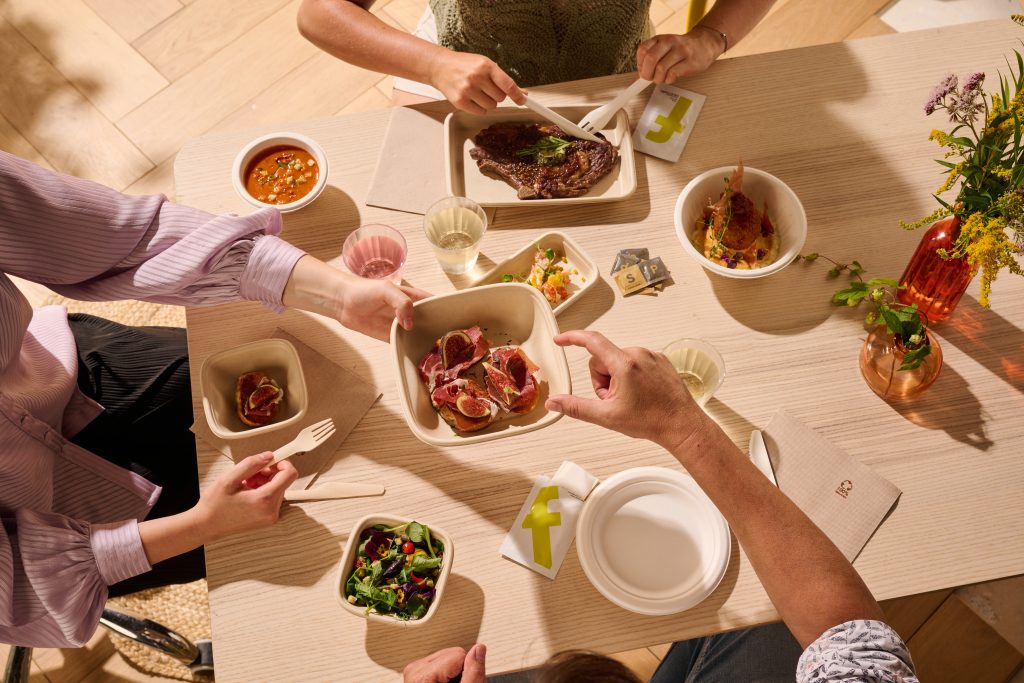
Small differences in material execution can have a significant impact on usability and satisfaction. Cutlery is a clear example. While many solutions may appear similar at first glance, performance varies widely in practice.
Low-quality materials can result in breakage, splintering, or an inconsistent eating experience. Higher-quality engineered solutions ensure reliability, comfort, and consistency across use cases.
At deSter, material selection and manufacturing standards are central to product development. For example, our paper cutlery is produced in Belgium using patented technology and controlled production processes, designed to deliver greater strength and a more refined user experience than standard alternatives.
These are details that are not always visible – but are always felt.
Packaging must perform across multiple priorities simultaneously
Modern foodservice packaging operates within a complex set of expectations.
It must support operational efficiency in high-volume environments, protect food quality throughout transport, align with brand identity, and contribute to sustainability goals—often simultaneously.
These requirements are not always aligned. A solution that performs strongly in one dimension may require compromise in another. This makes foodservice packaging a systems challenge rather than a product decision.
The most effective approaches are those that recognize this balance and design accordingly.
Conclusion: where experience, brand and operations come together
Foodservice packaging has evolved from a functional necessity into a strategic part of the customer experience. It influences perception, supports operational performance, reinforces brand identity, and increasingly plays a role in helping businesses achieve their sustainability ambitions.
Designing solutions that successfully balance all these requirements takes more than selecting the right material or container. It requires an understanding of consumer expectations, operational realities, and the trends shaping the future of foodservice.
This is where deSter’s design expertise comes into play. Through deStudio, our in-house design and innovation hub, we continuously explore new materials, monitor emerging consumer and hospitality trends, and work closely with customers to develop solutions that combine aesthetics, functionality, and sustainability. Whether selecting an existing product from our portfolio or co-creating a bespoke concept for large-scale projects, our goal is always the same: designing packaging and serviceware that works in the real world while enhancing the overall food experience.
Because great foodservice packaging is never just about what customers see. It’s about creating solutions that perform seamlessly for everyone behind the scenes—and leave a lasting impression on everyone at the table.